
Hot flashes and restless nights get most of the attention, but many women notice another change around the same time. Their eyes feel gritty, burn by mid-afternoon, or water for no obvious reason. That timing is no coincidence.
The hormone shifts of perimenopause and menopause change how your tears are made, and the experienced team at Advanced Sight Center regularly helps women manage the results. Here is what happens to your tears, how dry eye symptoms show up, and what might help you find relief.
What Makes Up Your Tear Film?
Each blink spreads a tear film across the front of your eye, and that film has three layers that all play a vital role in keeping your eyes healthy. A mucus layer sits closest to the eye and helps tears cling to its surface. A watery middle layer keeps the eye moist and rinses away debris. On top sits a thin oil layer made by the meibomian glands, tiny glands that line the edges of your eyelids.
When any layer falls short, the whole film becomes unstable. For women facing menopause, the oil layer is usually where the trouble starts.
What Hormones Do to Your Tears
Estrogen, progesterone, and testosterone all influence how the meibomian glands work. As these hormones decline, the glands produce less oil, and the oil they do make tends to be thicker and lower in quality. More than half of women develop dry eye symptoms as their periods slow and eventually stop.
Testosterone matters, too. It helps keep the oil glands active, and as levels fall, the glands can become sluggish or clogged.
Without a healthy oil layer, your tears evaporate within seconds instead of lasting until your next blink. The surface of your eye dries out and becomes irritated, and your brain reads that irritation as burning, scratchiness, or tired eyes.
You do not have to reach menopause to feel these changes. Hormone levels start to swing during perimenopause, which often begins in your 40s and can last several years. Many women first notice dry eye during this stretch, long before their final period.
How Menopause-Related Dry Eye Shows Up in Your Day

Common signs of dry eye include:
- A dry, gritty feeling, as if sand or an eyelash is stuck in your eye
- Burning or stinging
- Redness
- Blurry vision that clears when you blink
- Sensitivity to light
- Watery eyes
Certain situations can worsen these symptoms. You blink far less when you stare at a computer or phone, so symptoms often build over a workday.
Cold air, wind, and dry indoor heat speed up evaporation, which is why Missouri winters can feel especially rough on your eyes. Many women also wake up with dry, blurry vision because tear production slows overnight.
Treatments That Address the Oil Problem
Home care can make a real difference for many women with menopause-related dry eye, especially when you stick with it. Helpful habits include:
- A warm compress over closed eyes for 8 to 10 minutes before bed, which softens thickened oil so it flows more freely
- Gentle eyelid cleaning with a hygiene product made for the eyes
- More omega-3 fatty acids from fish, flaxseed, or a supplement
- A humidifier in your bedroom or office
- Regular screen breaks, looking at something across the room every 20 minutes or so
- Less time in contact lenses, which can make dryness worse
Your eyewear can help as well. Wraparound sunglasses shield your eyes from wind and glare, and switching from contacts to glasses on bad days takes pressure off a strained tear film.
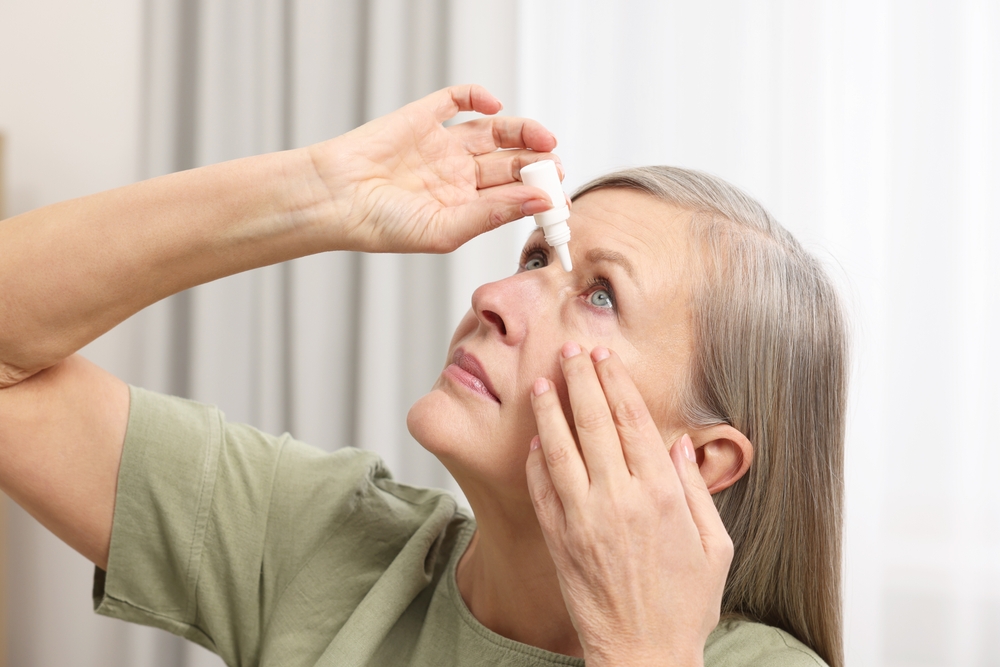
When home care is not enough, your eye doctor may recommend prescription eye drops or in-office treatments like punctal plugs. Prescription eye drops can calm the inflammation that often comes with dry eye and help your eyes produce more tears, while punctal plugs are temporary or permanent implants that block your tears from draining away too quickly.
If you are considering hormone therapy for other menopause symptoms, ask your physician how it may affect your eyes, since some medications can worsen dry eye symptoms.
What Happens if Dry Eye Goes Untreated?
Chronic dryness is not only uncomfortable, but can also harm the eye over time. A dry surface is prone to tiny corneal scratches on the clear dome at the front of the eye. Those small wounds raise the risk of infection and, in some cases, scarring that can permanently affect your vision. Ongoing eye pain, blurry vision that doesn’t clear with blinking, or worsening light sensitivity all call for an exam with an eye doctor experienced in corneal disorders.
The specialized team at Advanced Sight Center can evaluate your tear film, check the health of your meibomian glands and cornea, and build a treatment plan around the root cause of your symptoms.
Wondering if your dry, gritty eyes could be linked to menopause? Schedule an appointment at Advanced Sight Center in Washington, MO, today!




 A Vision Integrated Partners (VIP) Company